As a homeschooling parent, you may wonder what your Pre-Kindergartener should know to feel confident and prepared as they move forward in their educational journey. Rest assured, at this age, learning is meant to be gentle, joyful, and developmentally appropriate. Pre-Kindergarten is a time to nurture curiosity, build foundational skills, and foster a love of learning.
One of the most important things your Pre-Kindergartener needs is the ability to sit through a story. This means they can listen to a book being read aloud, stay engaged, and have a discussion about the story. This skill sets the stage for language development, comprehension, and critical thinking. It also helps them practice focus and patience—two important traits for the years ahead.
In addition, your child should develop the fine motor skills necessary to accomplish future educational tasks. These include holding a pencil correctly, cutting with scissors, and tracing simple shapes and letters. Activities like drawing, playing with playdough, and stringing beads can help strengthen those tiny muscles in their hands.
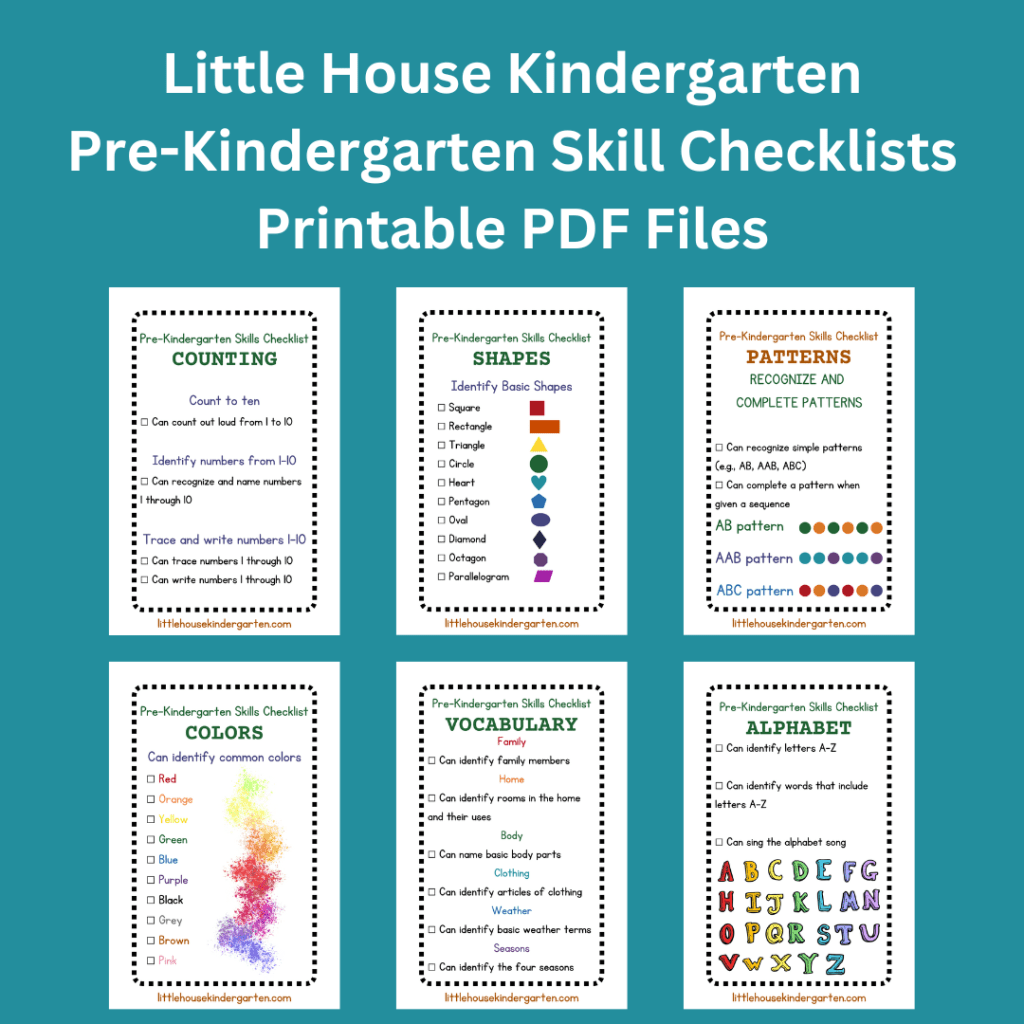
Below is a guide to the key skills your child should master by the end of Pre-Kindergarten. These skills will help them build a strong foundation for future learning.
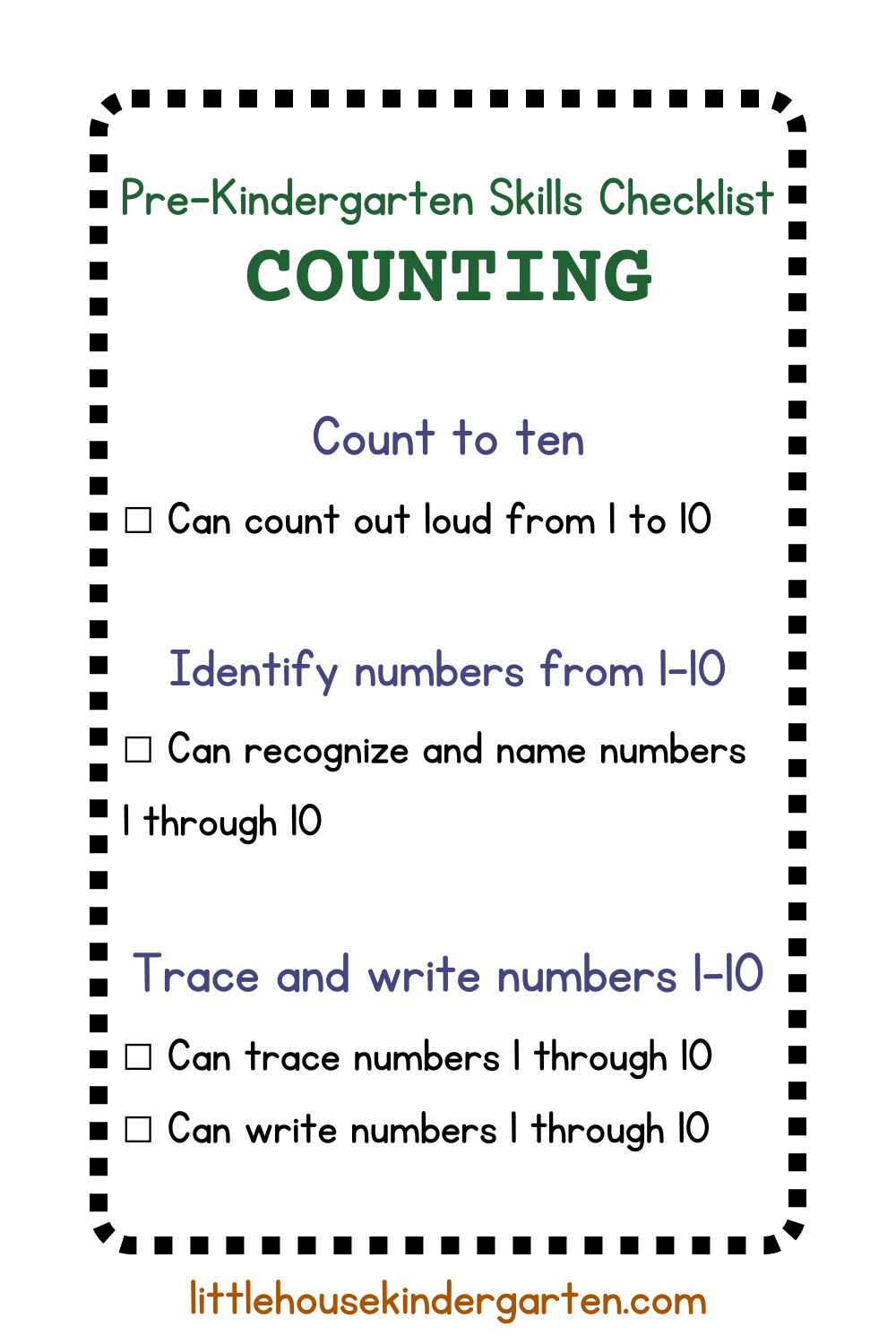
Math in Pre-Kindergarten focuses on simple, hands-on activities that teach basic counting, recognition, and patterning skills. By the end of the year, your child should be able to count out loud from 1 to 10 and recognize and name the numbers 1 through 10 when they see them. They should also practice tracing and writing these numbers, gradually developing the ability to write them on their own.
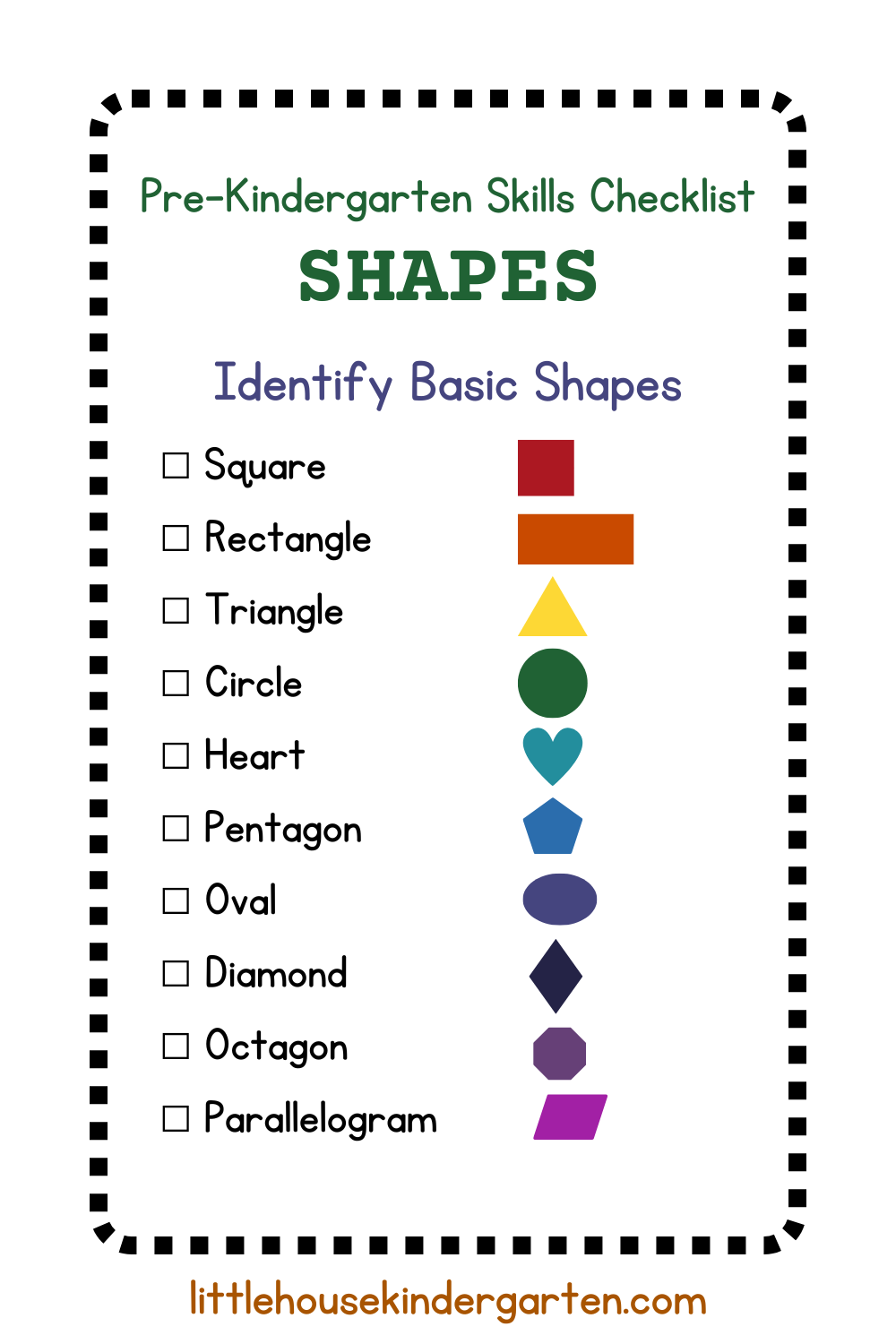
Understanding shapes is another essential skill. Your child should be able to identify common shapes like squares, rectangles, triangles, and circles, as well as less familiar ones like hearts, pentagons, ovals, diamonds, octagons, and parallelograms. Simple shape-sorting games or drawing activities can help reinforce these concepts.
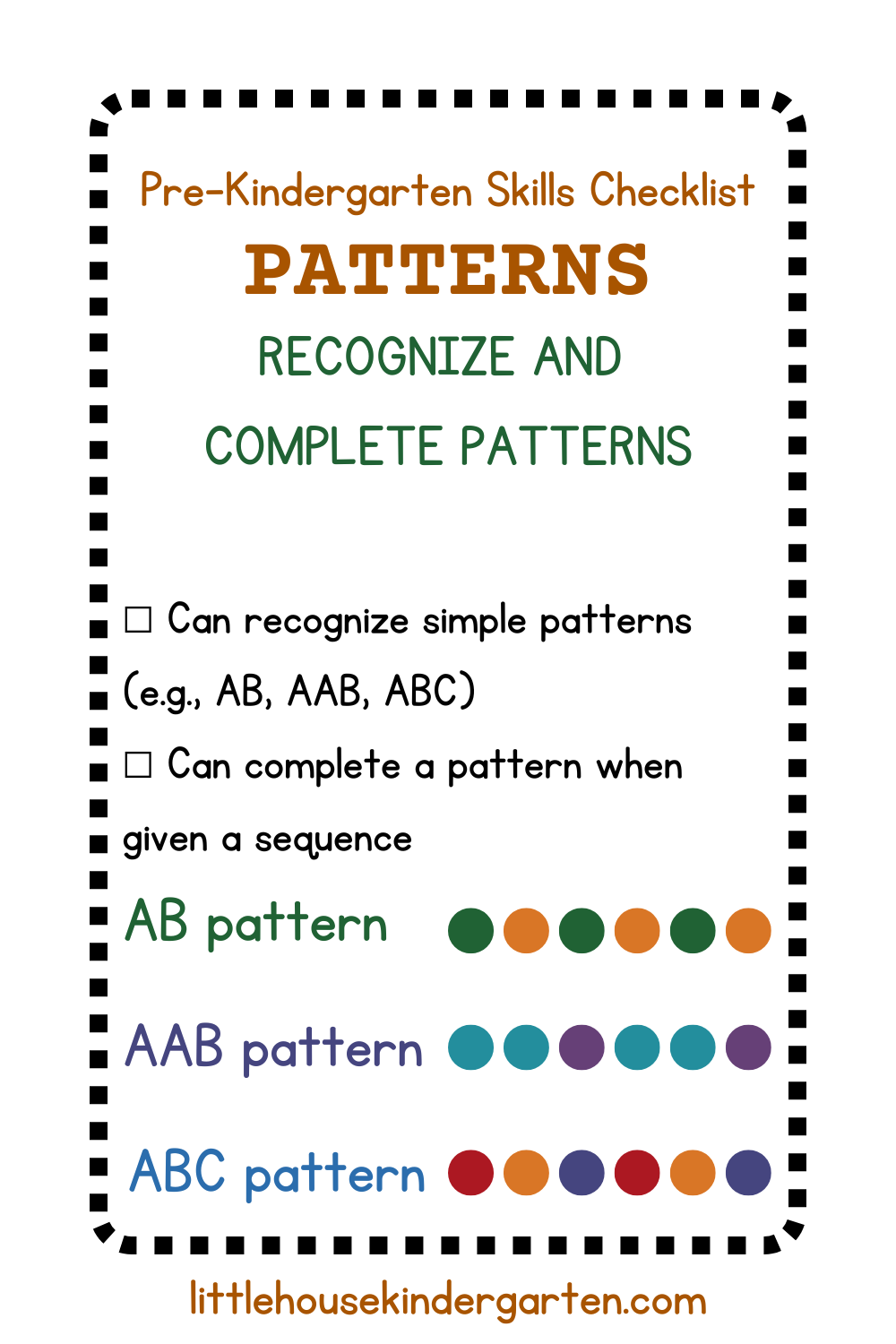
Pattern recognition is another key area. Pre-Kindergarteners should learn to recognize simple patterns such as AB, AAB, or ABC sequences and complete them when given a partial pattern. This skill develops logical thinking and prepares them for more complex math concepts later.
General Knowledge and Awareness
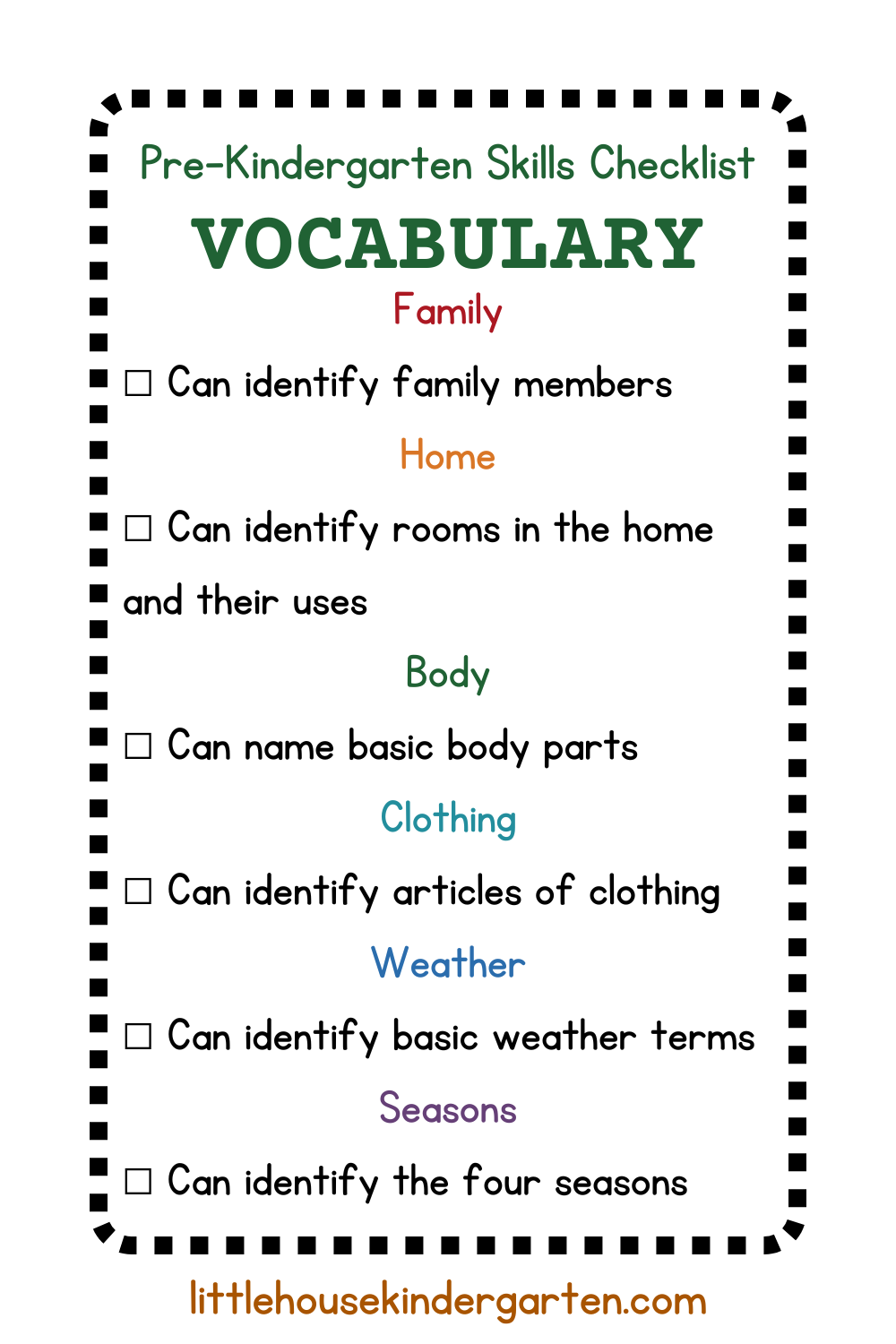
In addition to math skills, your child will benefit from developing general knowledge about their world. For example, they should be able to identify family members, rooms in the home, and the purposes of each room. This can be done through simple conversations or by creating a “house tour” game where your child explains the function of each space.
Your Pre-Kindergartener should also be able to identify basic body parts and common clothing items. Dressing dolls or playing “Simon Says” can help with this skill. Understanding basic weather terms and recognizing the four seasons are also valuable areas of learning. For instance, you might discuss the weather during morning routines or create a seasonal collage to help them visualize the differences between spring, summer, fall, and winter.
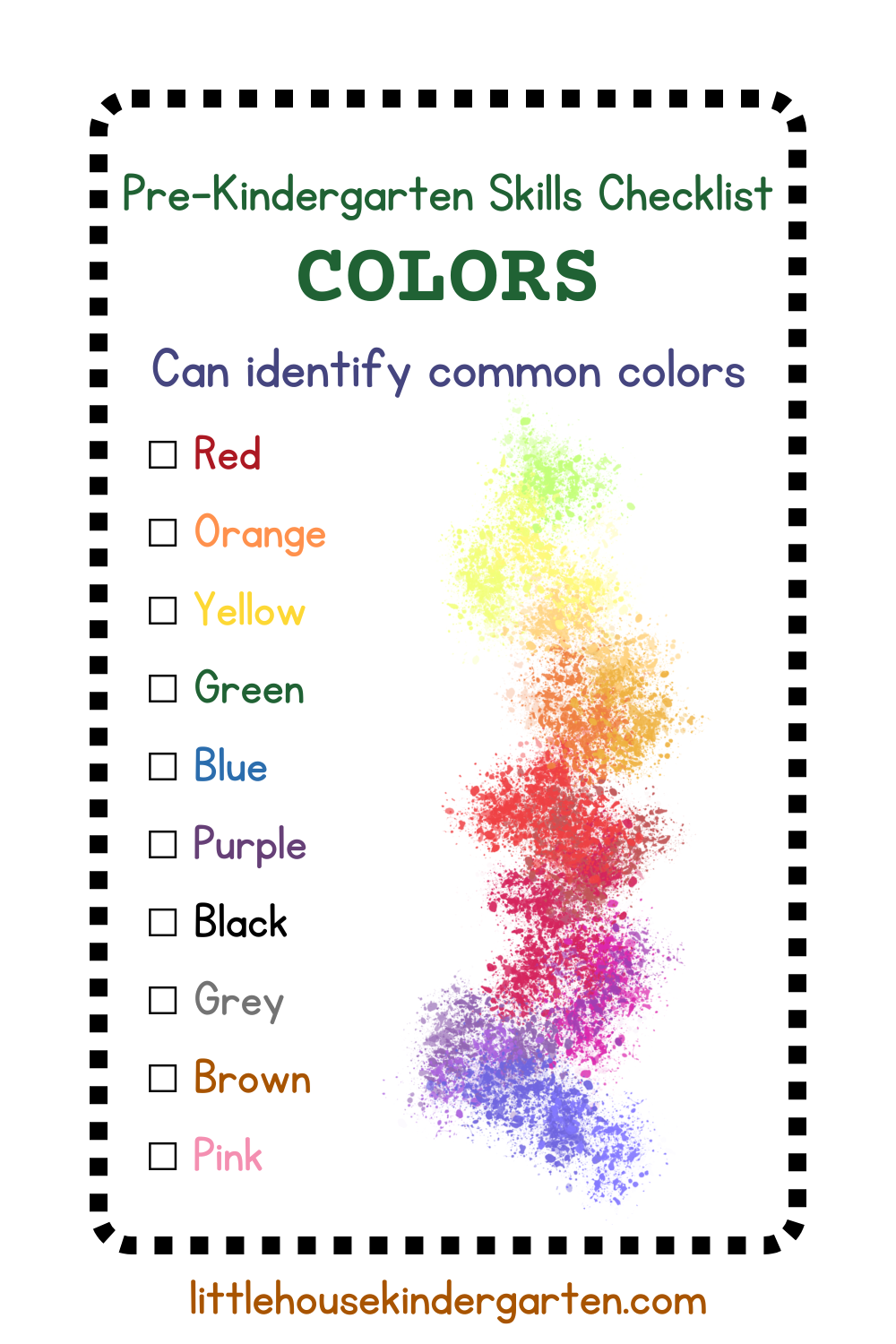
Finally, your child should become familiar with basic colors, including red, orange, yellow, green, blue, purple, black, grey, brown, and pink. Using everyday objects like crayons or toys is a great way to make learning colors engaging and interactive.
Alphabet and Language Skills
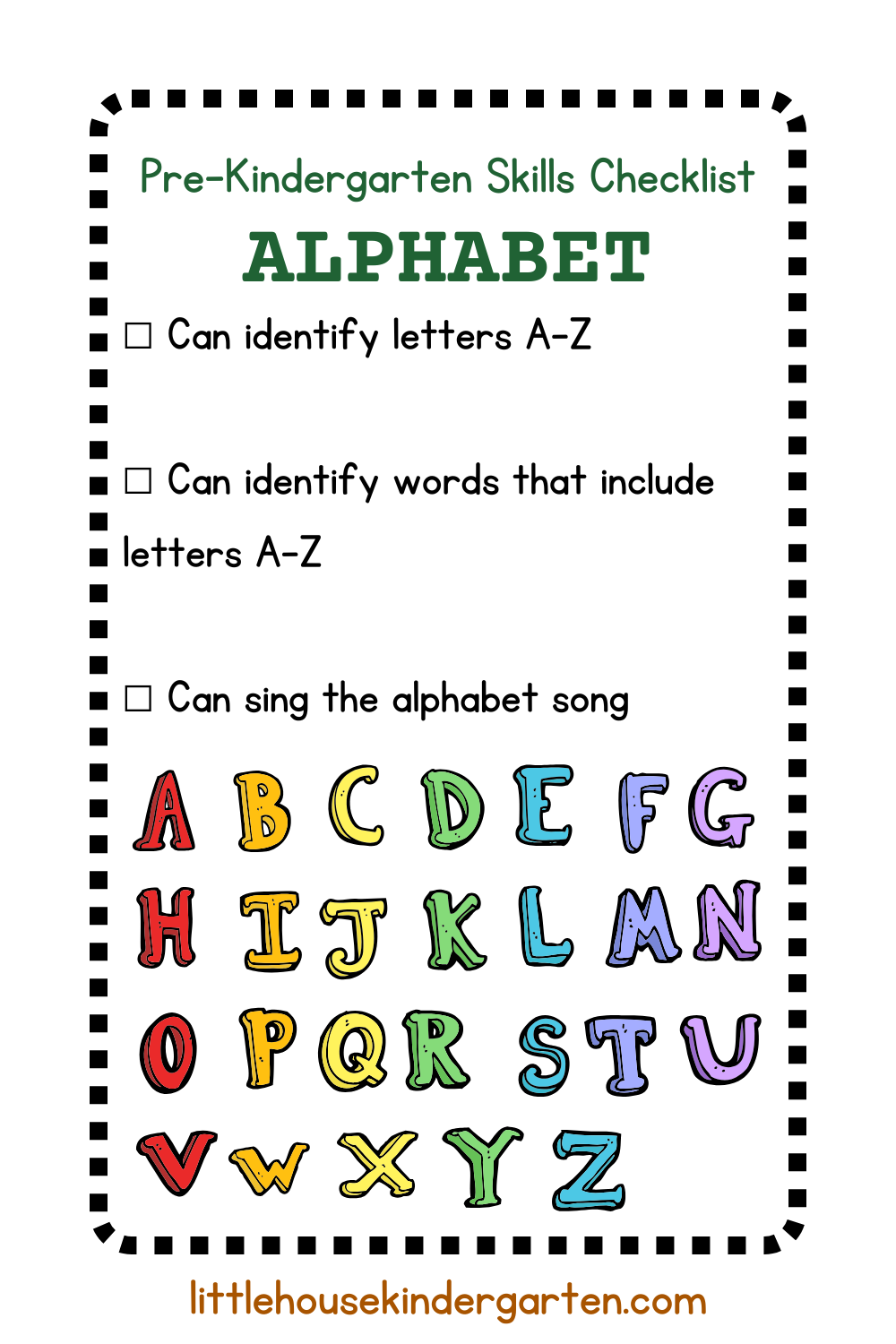
The alphabet is a big milestone in Pre-Kindergarten. By the end of the year, your child should be able to identify all the letters from A to Z and recognize simple words that include these letters. Singing the alphabet song is a classic and effective way to reinforce this skill. You can also introduce letter-matching games or practice tracing letters to build familiarity.
To support early literacy, focus on helping your child enjoy books and stories. Reading aloud daily is crucial. Encourage your child to retell stories in their own words or answer simple questions about what they heard. This strengthens comprehension and prepares them for more structured learning in the future.
A Gentle Reminder
Your Pre-Kindergartener is unique and will progress at their own pace. These milestones are meant to guide you, not stress you. If your child is not meeting a particular milestone yet, use it as an opportunity to gently work on that skill through fun and engaging activities. Remember, your encouragement and enthusiasm are the most important tools in their learning journey. You’ve got this!
Are you looking for a professionally designed, free online kindergarten curriculum? At Little House Kindergarten, we understand the challenges parents face when choosing the right resources for their child’s education. That’s why we offer a completely free full-year (180-day) homeschool curriculum tailored to kindergarten and pre-K learners.
What is Little House Kindergarten?
Choosing an online kindergarten curriculum offers homeschooling families unparalleled flexibility, affordability, and accessibility. With the ability to tailor education to your child’s unique needs, this approach saves both time and money.
At Little House Kindergarten, we take these benefits a step further by offering a screen-free option—perfectly aligned with what’s developmentally appropriate for young learners. Our curriculum provides 180 days of English Language Arts and Mathematics worksheets, offering parents a clear and structured plan to support foundational skills like reading, writing, and math.
Beyond worksheets, we include a variety of fun, play-based, hands-on activities that make learning engaging. These activities strengthen essential skills such as fine motor development, critical thinking, and creativity.
One of the core principles of Little House Kindergarten is putting family first. The curriculum encourages families to bond through fun activities, shared read-aloud sessions, and opportunities to learn together. This approach not only builds strong family connections but also fosters a lifelong love of learning.
With Little House Kindergarten, you get the perfect blend of structure and flexibility, ensuring your child’s education fits seamlessly into your family’s lifestyle.
Little House Kindergarten Frequently Asked Questions
How much time should parents spend daily? With Little House Kindergarten, parents can expect to spend about one hour a day on direct instruction. This includes working through the provided worksheets and engaging in fun, guided learning activities. Beyond that, your child will benefit from play-based learning and time spent exploring the world around them—essential components of early childhood education.
What resources will you need? To use the curriculum, we recommend printing out the worksheets. You can access them for free or through a high-quality, give-what-you-can PDF available here for Pre-K and here for Kindergarten. For the best experience, gather these essentials: • Basic school supplies, like crayons and pencils. • A selection of recommended books for read-alouds (a list is included in the curriculum).
Our play-based activities use everyday household items or natural materials you can find outdoors, keeping things simple and budget-friendly. If you prefer, we also offer ideas for ahomeschooling kit with educational materials specifically tailored for hands-on activities.
How does your curriculum prepare students for first grade? Little House Kindergarten was professionally designed by Hannah Ward, M.Ed., a homeschool mom and experienced educator. The curriculum aligns with and exceeds common educational standards for kindergarteners in the USA. By completing the program, your child will have a strong foundation in core areas like reading, writing, and math, fully preparing them to succeed in first grade.
What should we do after Little House Kindergarten? We recommend continuing with the All-in-One Room Schoolhouse curriculum, also created by Hannah Ward, M.Ed. This free program is designed to take students from early childhood education all the way to college readiness. Rooted in the timeless wisdom of the one-room schoolhouse, it offers a comprehensive and flexible learning experience that grows with your child.
Cathy Duffy, a respected homeschool curriculum reviewer, shared these thoughts about Little House Kindergarten:
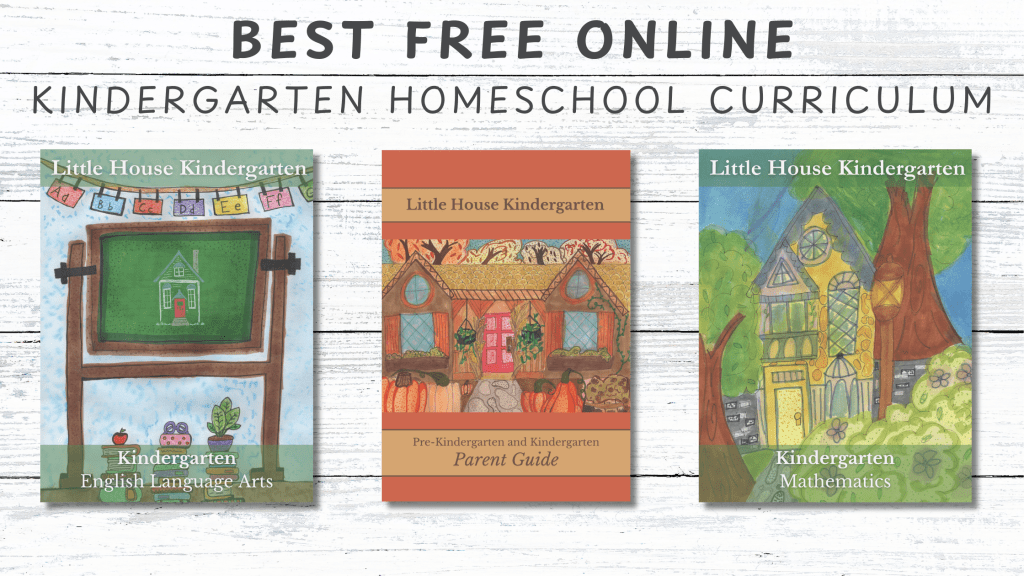
Little House Kindergarten, a free, secular program with resources for preschool and kindergarten, is presented in five PDF books: Parent Guide (covering both preK and kindergarten), Pre-Kindergarten English Language Arts, Pre-Kindergarten Mathematics, Kindergarten English Language Arts, and Kindergarten Mathematics. The program follows a relaxed timeline for preK and kindergarten, working on reading readiness rather than blending sounds and decoding words. Math is less relaxed than reading.
The program combines poetry, coloring, active and outdoor learning, crafts, games, songs, and other creative learning with two daily worksheets for math and language arts. The focus of the program is primarily on math and language arts, but it also stresses the importance of reading “living books” with children to expand learning beyond those subjects. Author Hannah Ward says,
By reading living books and exploring topics through stories, children can absorb information about the world around them in a way that feels natural and enjoyable. Field trips, nature walks, hands-on play, and discussions after reading allow children to connect the dots between what they learn and how it applies in the real world (Parent Guide, p. 4).
It’s very easy to figure out how to use the program from the guide’s one-page explanation. In addition to brief instructions, the 44-page Parent Guide has lists of multisensory activities to teach different skills and recommended reading lists of living books with discussion prompts for some of the recommended series of books.
All four student books have almost 200 pages each and begin with a one-page skills checklist showing what students should learn by the end of each course.
The checklist is followed by the lists of suggested activities that are repeated in the Parent Guide. For instance, the kindergarten language arts book has four one-page activities lists:
Vocabulary and Background Knowledge
Understanding Stories
Write A-Z
Alphabetical Order
The Understanding Stories list has six activities, one of which reads:
Favorite Parts Collage: Activity: After reading multiple stories or poems, ask your child to create a collage of their favorite parts using drawings or cut-out images from magazines. Have them share their collages and explain why they chose those moments. Tip: Encourage them to use descriptive words when sharing, enhancing their vocabulary. (p. 4)
Among the other activities are nature walks, songs, finger play, crafts, body-movement games, sorting, cutting things out, etc. The activities are not scheduled but should be used frequently—I would suggest at least one per day. The “3 Step Daily Learning Guide” says to complete a worksheet each day for math and language arts and also read aloud and discuss a book. It doesn’t include the activities from the lists as daily requirements, except occasionally in preK math, although the activities might be even more useful than the worksheets for learning. Instead, the guide says parents should choose activities “that are meaningful and enjoyable for your family.” It would be easy to just use the worksheets, but the combination of all three types of learning is what makes this a good program for covering preK and kindergarten. The best way to ensure that all three modes of learning happen is to schedule in advance which activities and books you will use alongside the worksheets.
The lists are followed by the Daily Practice Worksheets, the bulk of each book. Students are expected to complete one per day for math and language arts, but eager students might want to do more.
Want a high-quality printable version? Get it on a give-what-you-can basis and enjoy a beautifully formatted PDF version of the curriculum. Start today and give your child the gift of a creative, hands-on learning experience! The printable kindergarten PDF can be found here and the printable pre-kindergarten PDF can be found here.
As you embark on your homeschooling journey with Little House Kindergarten, it’s helpful to have access to a wealth of resources to guide you in supporting your child’s educational development. Below are some trusted sites that can provide valuable insights on kindergarten readiness, curriculum planning, and best practices for early childhood education:
U.S. Department of Education – Kindergarten Readiness
Kindergarten Readiness – U.S. Department of Education This page offers valuable insights into what children need to succeed in kindergarten and how parents and educators can help prepare them for success. It’s a great starting point for understanding the foundational skills your child will need.
National Association for the Education of Young Children (NAEYC) – Kindergarten Readiness
NAEYC – What Children Need to Thrive in Kindergarten NAEYC is a trusted resource for early childhood education, providing a detailed guide on what children need to be ready for kindergarten. Their research supports the importance of social, emotional, and cognitive development in these early years.
PBS Kids – Kindergarten Readiness
PBS Kids – Kindergarten Readiness PBS Kids offers practical tips for parents to help their children develop the skills needed for kindergarten. This resource highlights key areas of development, from early literacy to social skills.
Understood – Skills Needed for Kindergarten
Understood – Skills for Kindergarten Understood is a leading resource for parents of children with learning and attention issues. This page outlines the key skills kids should have when entering kindergarten, and how to support learners with different needs.
Scholastic – Kindergarten Curriculum Guide
Scholastic – Kindergarten Curriculum Guide Scholastic’s guide provides a clear breakdown of what children should be learning in kindergarten, from reading and math to social skills. It’s a valuable resource for setting expectations for your child’s learning progress.
Education.com – Kindergarten Curriculum Guide
Education.com – Kindergarten Curriculum Overview Education.com offers a thorough curriculum guide, highlighting what kindergartners should be learning in various subjects and providing tips on how to support these skills at home.
In addition to these resources, we recommend exploring the research and expert recommendations below to deepen your understanding of homeschooling:
National Home Education Research Institute (NHERI)
NHERI Research NHERI is a leader in homeschooling research, providing evidence on the effectiveness and benefits of homeschooling. This resource helps to reinforce the validity of homeschooling as a viable educational option for young learners.
American Academy of Pediatrics – Early Childhood Education
AAP Early Childhood Education Guidelines The American Academy of Pediatrics offers expert guidelines on early childhood education. This resource is an excellent way to ensure that your homeschooling approach aligns with the latest health and educational standards.
By utilizing these additional resources, you can further enhance your homeschooling journey with Little House Kindergarten and ensure that your child receives a well-rounded, developmentally appropriate education. Whether you’re just starting or looking to fine-tune your approach, these resources will provide the support you need to help your child succeed.
Major Little House Update:
After major discussion the makers of Little House have decided that we want to be able to provide our entire high quality curriculum series for free for families in need- including our supplementary 5 Day Virtual Fieldtrips, and Little House Organization Pack. We don’t believe that financial barriers should prevent homeschooling families in need from providing the best quality education they can for their children. We are now offering a scaled pricing system for families in need.
BUT, we really need your help. If you are in the financial position to help Little House in even the smallest way, it would be a huge help. So far the team at Little House has had to pay all of the technical costs of running the site with our own money. To be able to continue to expand to further grades we need the help of Little House users. It takes a massive investment of time and money to provide free curriculum on a quality secure site. As more grades are added (and more websites are added) to Little House Homeschool our personal financial burden increases exponentially. If we can receive financial support we can release more quality curriculum for free at a faster rate.
How Can I Help?
There are three ways that you can help keep Little House running for everyone for a long time.
1. You can visit our Donation page and contribute directly.
2. When you purchase a Little House product you can choose the scaled pricing option where you help to contribute a scholarship for another family who is unable to pay anything right now or can only contribute a small tip for the product. This is such a blessing for families who want to provide quality curriculum for their children but don’t have the financial means to do so at the present time.
3. When you purchase a Little House product you can choose to not only contribute to a scholarship for another family for that product, but also to support the technical side of the site. If you appreciate what we do and would like to be a full supporter who directly keeps the site running this is an amazing way to help.
This is an example of our new scaled pricing model for one of our Little House products.
Pricing Guide:
$0: I’m unable to pay right now.
$5: Thanks, here’s a tip!
$17.97: I can pay the suggested price.
$35: I would like to contribute to the Little House Scholarship Fund so that people in need can access this curriculum for free.
$50: I’m a full supporter of Little House and want to contribute to keep the site running.
To become a member of the free Little House Homeschool mailing list and receive updates on when new curriculum is released click here.
This resource is K-8 and will work well for Elementary and Middle School students.
Get ready for a 5 day virtual vacation to the Emerald Isle of Ireland! Your students can fully immerse themselves in the enchanting land of Ireland with 5 full days of crafts, music, engaging videos, recipes, informative reading, story telling and much more!
5 Day Virtual Vacation Pack Includes:
Teaching guide for all 5 days of exploration. The teaching guide includes quality resources and ways to utilize these resources to make the 5 day virtual vacation memorable, enjoyable, and educational for all of your students. The teaching guide is bundled with an 8 page printable workbook with coloring pages, country fact worksheets, and writing prompts for the students to use during the 5 days.
Topics in the teaching guide include:
History of well known Irish symbols like the shamrock, castles, and the Irish flag
The true story of the Patron Saint of Ireland, Saint Patrick
Diving into Irish mythology: Leprechauns, Fairies, Mermaids and more!
Exploration of ancient Irish castles
Easy to make traditional Irish recipes that the whole family can cook together
Beautiful Irish crafts
High quality videos and music
…and much more!
You can purchase the bundle by clicking the link below. If you are unable to pay, or would like to know more about our scaled Little House pricing: click here. Purchase By Clicking Here